The Future of Writing Starts Before the Keyboard
The future of writing is not voice versus typing. It is a better path from thought to draft to edited text.

Voice Cursor Team
March 15, 2026 3 min read
For most of computing history, the keyboard has been treated like destiny.
If you wanted to write, command, search, build, message, prompt, document, or think through a machine, you typed. The keyboard became the narrow pipe between human intention and digital output.
It worked well enough that we stopped questioning it.
But the keyboard was never the natural shape of thought.
People do not think in neat lines. They think in fragments, memories, objections, examples, sudden connections, and half-formed arguments. A good idea often arrives as a rush, not a paragraph.
Then we force it through keys.
Voice changes that.
The future of writing is not that everyone stops editing or that every spoken word becomes sacred text. The future is that speech becomes a normal way to create the first draft of thought.
Voice Cursor is built for that future.
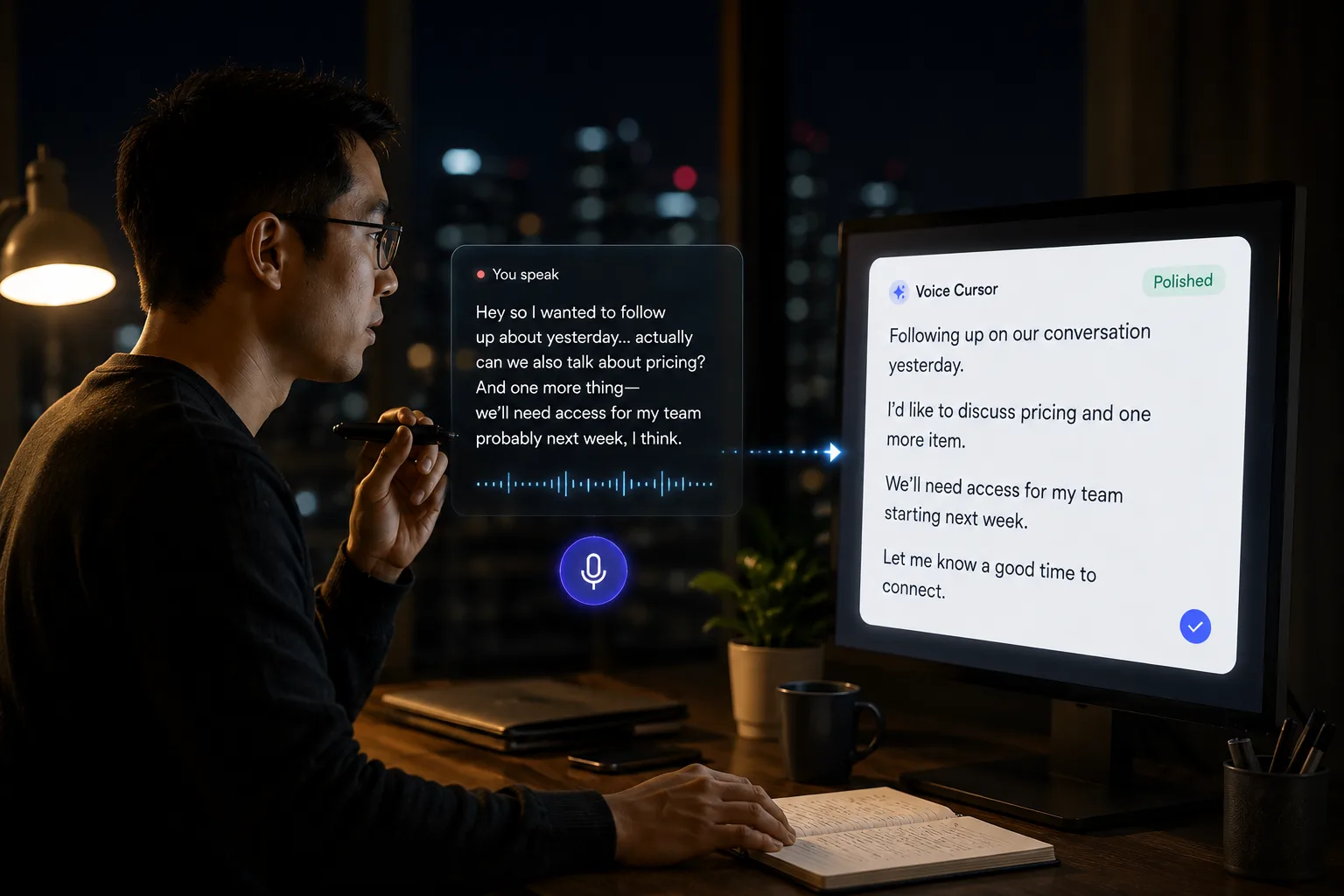
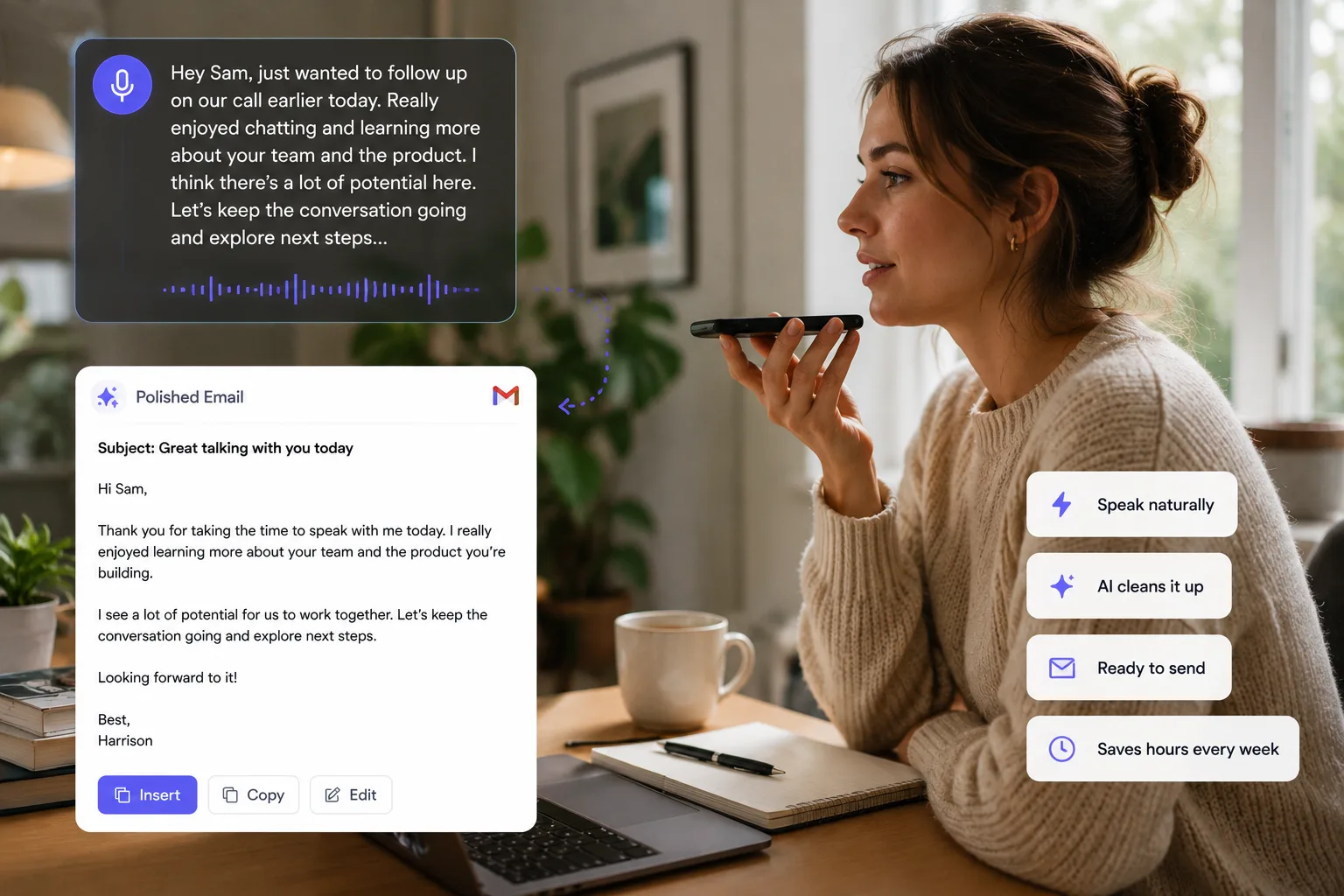
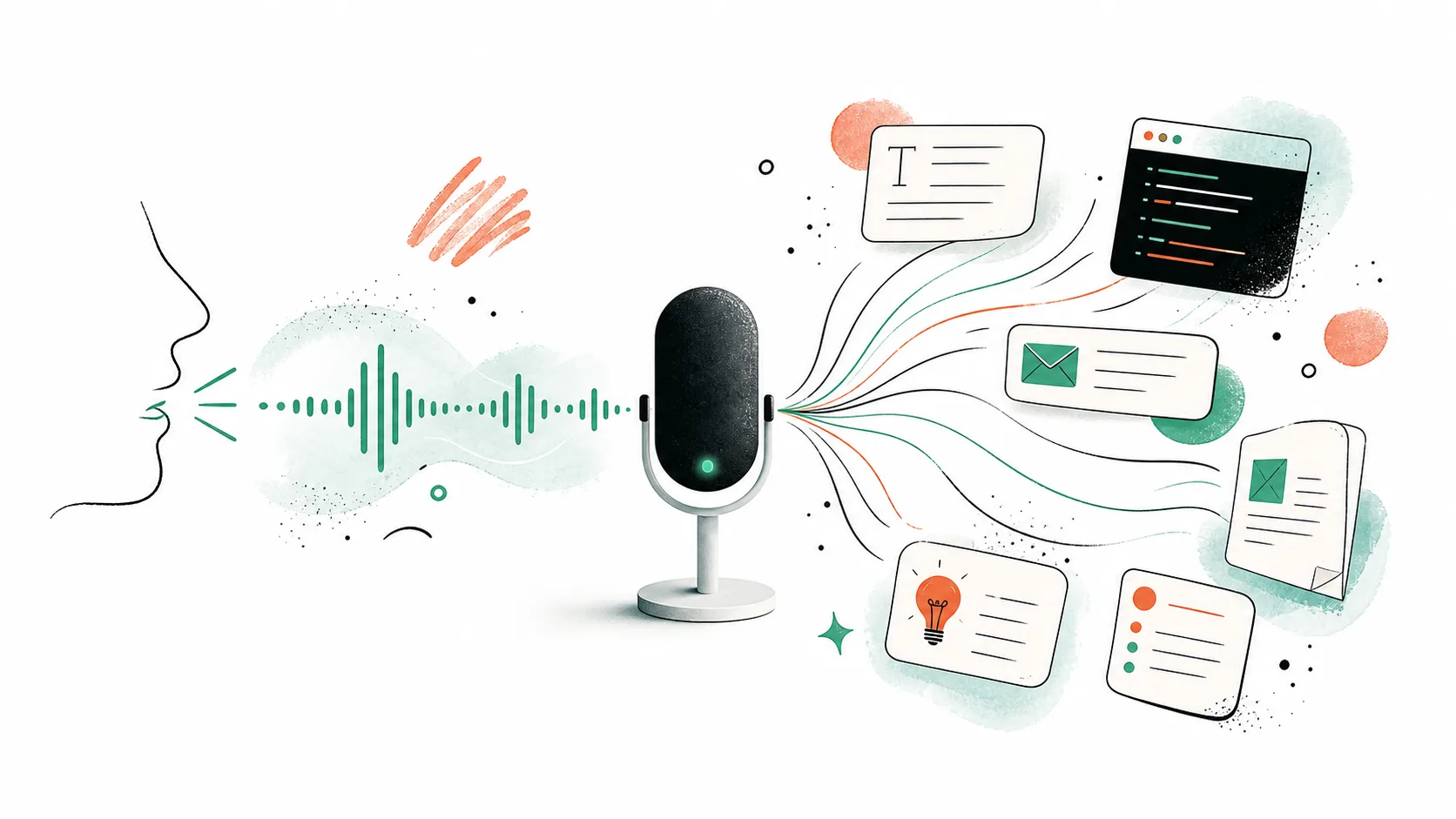
Today, Voice Cursor is an AI voice dictation app. You speak naturally, and it helps turn rough speech into polished writing. Use it for emails, notes, AI prompts, messages, coding instructions, customer replies, founder updates, and the everyday text that modern work demands.
That sounds simple.
But the interface shift underneath is large.
For decades, software has expected humans to adapt to machines. We learned commands, shortcuts, menus, syntax, and workflows. We trained ourselves to communicate with computers in computer-shaped ways.
AI begins to reverse that.
A more intelligent computer should not require every thought to be chopped into clicks and keystrokes. It should accept more natural input. It should understand language. It should help transform intent into action.
Dictation is one of the first steps.
Not old-school dictation that blindly transcribes every filler word.
AI dictation.
A system that understands that speech is messy and writing should be clear. A system that can remove the "uh," clean the grammar, preserve the idea, and produce something useful.
This matters because more work is becoming language work.
A developer writes prompts to an AI coding tool. A founder writes investor updates. A recruiter writes candidate messages. A student writes summaries. A salesperson writes follow-ups. A designer writes feedback. A PM writes tickets. A creator writes scripts.
The world is not writing less.
It is writing constantly.
Voice gives people a faster way to begin.
The next writing interface will not ask every thought to arrive already formatted for a keyboard.
The keyboard will not disappear. It should not. It is precise and powerful. But it will stop being the only serious input method for written work.
In the future, writing will feel more like conversation with a machine that can help structure your thought.
You will speak the messy version.
The machine will help shape it.
You will edit with taste.
That is the loop.
Voice Cursor starts there: rough speech into polished writing.
The larger vision is a computer that feels less like a machine you operate and more like an assistant you can communicate with naturally.
The future of writing is talking.
Not because speech is perfect.
Because thought deserves a wider door.
FAQ
Is voice the future of writing?
Voice will likely become a major way people create first drafts, prompts, notes, and messages, especially as AI improves the quality of dictated text.
Will voice replace typing?
No. Voice is powerful for drafting. Typing remains useful for editing, formatting, and precise control.
What does Voice Cursor do today?
Voice Cursor turns spoken thoughts into polished text for everyday writing workflows.
Try Voice Cursor
Turn spoken thoughts into polished writing.
Download Voice Cursor and use AI voice dictation across the apps where your work already happens.
Download the app